
Science Kit
Scientific Instrument
- Power Supplies and Transformers
- Training Kits for Communication Lab
- Digital Electronic Experiments Computer Principles
- Study of Multivibrators
- Characteristics Operational Amplifiers
- Verification of Network Theorem
- Amplifiers Kits
- Demonstration Models
- Verification of Various Laws and Conservation of Signal
- Semi Conductor Devices
- Laser Experiment
- Characteristics Of Vaccum Tubes
- E M Apparatus Instrument
- Microprocessors
- OPTO Electronic Devices Equipments
- Digital Measuring Instruments
- Nuclear Physics
- Test and Measuring Instruments
Educational Rock and Minerals
Biology Equipment
- Prepared Slides Equipments
- Plant Equipment
- Magnifier Equipment
- Animal Equipments
- Biotechnology Equipments
- Cell Equipments
- Classification Equipments
- Dissection Equipments
- Electrophoresis Equipments
- Enzyme Equipments
- Genetics and Inheritance Equipments
- Health Equipments
- Human Biology Equipments
- Microbiology Equipment
- Molecular Model Equipment
Soil Testing
Rock Testing
Best Lab Equipment
Educational Lab Equipment
Analytical Lab Instrument
- Electrochemistry Instruments
- Flame Photometer
- Pharmacology Instruments
- Tablet Making Machine
- Apparatus For Isolated Uterus Intestine
- Water Still
- B.O.D. Incubator
- Egg Incubator
- Incubator Bacteriological
- Drying Oven Industrial
- Hot Air Universal Oven
- Shaker
- Incubators
- Hot Plate
- Clean Air Equipments
- Baths
- Autoclaves
- Surveying Instruments
- Pipette Washer (Automatic)
- Tissue Homogeniser
- Moisture Meter
- Mortuary Chamber
- Soxhlet Extraction Unit
- Kjeldahl Units (Without Glass Part)
- pH Meters
- Conductivity Meter
- Salinity Meter
- Dissolved Oxygen Meters
- Turbidity Meters
- Colony Counter
- Moisture Titrator
- Fluorometer
- Dissolution Test Apparatus
- Friability Test Apparatus
- Pyrogen Testing Instrument
- Tap or Bulk Density Apparatus
- Leak Test Apparatus
- Flocculator Jar Test Apparatus
- Microprocessor Flame Photometers
- Pharmacy Laboratory Equipments
- Respiration Pumps
- Brodie Operating Tables
- Embalming Tables
- Rat Operating Tables
- Small Animal Operating Tables
- Animals Holders
- Animals Head Holders
- Pneumograph Stethographs
- Spirometers
- Benedict Roth Recording Spirometers
- Digital Respinometers
- Organ Baths
- Isolated Organ Baths Digitals
- Four Unit Organ Baths
- Perfusions Lagendroff Assembly
- Dubois Raymond Keys
- Simple Keys
- Induction Coils
- Student Induction Coils
- Variable Interrupters
- Mosses Ergographs
- Compass Aesthesiometers
- Hand Grip Dynamometers
- Skin Fold Calipers
- Macerators
- Tablet Polishing Pans
- Tablet Making Machines (Electrically Operated)
- Tablets Making Machine Motorised
- Tablets Making Machine Hand Operated
- Apparatus Isolated Uterus Intestine
- Clean Air Benches
- Bio Safety Cabinet
- Laboratory Fume Hoods
- Fumigation
- Environmental Growth Chamber
- Ovens
- Water Distillation Plant
- Water Baths
- Hot Plates Warming Tables
- Dry Block Digester
- Shaking Machines And Stirrers
- COD Digester
- General Laboratory Equipment
- Spectrophotometer
- pharmaceutical-instruments/Pharmacology Equipments
Laboratory Apparatus
Laboratory Equipments Supplies
Engineering Lab Equipment
- Metallurgical Equipment
- Survey Instruments
- Incinerator
- Razor Sharpener
- Heat Transfer Lab Equipment
- Fluid Mechanics Lab Equipment
- Civil Engineering Lab Equipment
- Charts
- Bottle Top Dispenser
- Adsorption in Packed Beds
- Botany Charts
- Zoology Chart
- Chemistry Charts
- Physics Charts
- General Science Charts
- Genetics and Evolution Charts
- Human Physiology Charts
- Life Sketch of Scientists
- Food And Nutrition
- Health Care Series
- Prevent Diseases
- First Aid Charts
- Yogasana Charts
- Mathematics Primary Charts
- Charts on Geography
- Changing Face of the Earth
- Man and Environment
- Weather Maps of India
- Alphabet Charts
- Special Charts
- Moral Story Charts
- Specials Roll ups
- Struggle For Indian Freedom
- National Integration Charts
- Life Sketch of Great Men
- English Teaching Charts
- English Grammar Charts
- Military Science
- Army, Police and NCC Charts
- Maps Charts
- State Maps Political
- Civil and Draughtsman Equipment
- Nautical Compass
- Survey Equipment
- Soil Testing Equipments
- Measuring Instruments
- Tripods Stands
- Portholes
- Nautical Sextants
- Prism Sets
- CNC Trainer Machine
- Training Workshop Labs
- Mechanical Engineering Lab Equipment
- Air Conditioning and Refrigeration
- Automotive and Transportation
- Building Material Testing
Maths Lab Equipment
Porcelain Ware
Hospital Lab Equipments
Anatomical Models
- Dental Models
- Skeletons For Medical Students
- ENT Models
- Cancer Model
- Diabetes Model
- Implant Models
- Brain Models, Neuro Models
- Liver and Gastro Models
- Gynae Models, Female Health, Utreus Models
- Four Stage Liver Models
- Special Models
- Arthritis Models
- Heart and Artery Models
- Ortho Models
- Heart and Lungs Models
- Nurse Training Models
- Life Support Training Models
- Human Models
- Anatomical Models Equipments
Vocational Training Laboratory Equipment
- Woodworking Workshop Machines
- Wood Workshop Portable Tool
- Plant Engineering and Welding Equipment
- Welding Equipment and Workshop Lab Machine
- Standard Welding Equipment Set
- Electrical Work Bench
- Workshop Tools
- Plumbing Workshop Instrument
- Concrete Laboratory
- Soil Mechanics
- Hydraulics and Pneumatics
- Metal Manufacturing Training Machine
- Washing Machines
- Textile Technology
Lab Glassware
- Watch Glass Soda
- Voltameters
- Stirrers
- Test Tubes and Thermometer Pockets
- Staining Jars Glassware
- Specimen Tubes and Vials
- Spirit Burners
- Screwthreads, Discs and Joints
- Screw Caps, Stoppers and Stopcocks
- Distillation
- Extractors
- Coplins Jars
- Condenser
- Chromatography Columns
- Bends
- Beakers and Flasks
- Laboratory Adapter Oscilloscope Kit
Electronics Lab Equipments
- Variac Dimmerstats
- Signal Generators
- Fiber Optic Trainers
- Digital Storage Oscilloscopes
- Digital Electronics Trainer
- Communication Trainer
- Breadboard Trainers
- Analog Electronics Trainer
- Oscilloscopes
- Power Electronics Trainers
- Electronic Fundamentals
- Audio and Visual Technology
- Radio and Telephone Communications
- Electrical Technology
- Wiring, Distribution and Protection
- Electrical Motor Control
- Data Acquisition, Instrumentation and Process Control
- Lighting and Building Control Systems
Lab Plasticware
Chemistry Lab Equipment
Physics Lab Equipment
- Measurement
- Magnetisms
- Heat
- AP Physics
- Physics Lab Equipments
- Atomic Physics Equipment
- Density Equipment
- Electricity Equipment
- Electromagnetism Equipment
- Electrostatics Equipment
- Energy Transfer Equipment
- Force Motion And Dynamic Equipment
- Mechanics Lab Equipment
- Light And Optics Equipment
- Renewable Energy Equipment
- Sound and Waves
- Education Kit
Geography Lab Models
Analog Electronics Trainer Manufacturer, Suppliers and Exporter in India
Jaincolab Manufacturers is a leading Analog Electronics Trainer Manufacturer, Supplier, and Exporter in India, United States, Indonesia, Brazil, Bangladesh, Mexico, Japan, Egypt, Philippines, Democratic Republic of the Congo, Vietnam, Iran, Turkey, Tanzania, United Kingdom, France, South Africa, Italy, Kenya, Colombia, Sudan, Uganda, South Korea, Argentina, Afghanistan, Yemen, Angola, Morocco, Poland, Uzbekistan, Mozambique, Malaysia, Ghana, Saudi Arabia, Peru, Madagascar, Côte d’Ivoire, Cameroon, Niger, Venezuela, Australia, Syria, Mali, Burkina Faso, Sri Lanka, Malawi, Zambia, Chad, Kazakhstan, Somalia, Chile, Senegal, Ecuador, Cambodia, Zimbabwe, Guinea, Benin, Rwanda, Burundi, Bolivia, South Sudan, Tunisia, Haiti, Belgium, Dominican Republic, Jordan, United Arab Emirates, Honduras, Tajikistan, Papua New Guinea, Portugal, Togo, Sierra Leone, Belarus, Laos, Turkmenistan, Libya, Kyrgyzstan, Nicaragua, Paraguay, Bulgaria, Serbia, Republic of the Congo, Lebanon, Liberia, Central African Republic, Palestine, Oman, Mauritania, New Zealand, Costa Rica, Kuwait, Panama, Croatia, Georgia, Eritrea, Mongolia, Uruguay, Qatar, Namibia, Bosnia and Herzegovina, Moldova, Armenia, Gambia, Jamaica, Lithuania, Albania, Gabon, Botswana, Lesotho, Guinea-Bissau, Slovenia, Equatorial Guinea, Latvia, North Macedonia, Bahrain, Trinidad and Tobago, Timor-Leste, Cyprus, Estonia, Eswatini, Mauritius, Djibouti, Fiji, Comoros, Solomon Islands, Guyana, Bhutan, Luxembourg, Suriname, Montenegro, Malta, Maldives, Cabo Verde, Brunei, Belize, Bahamas, Iceland, Vanuatu, Barbados, São Tomé and Príncipe, Samoa, Saint Lucia, Kiribati, Seychelles, Grenada, Saint Vincent and the Grenadines, Antigua and Barbuda.
Which analog electronics trainers are in this range?
This range has 31 analog electronics training boards for electronics and physics laboratories. They cover diode, transistor, MOSFET, UJT and thyristor characteristics, amplifiers and an RF oscillator, networks, resonance and filters, AC bridges and basic circuit laws. Two fibre optic link trainers are also listed here. Most boards have built-in regulated supplies and run on 230 V mains.
- Training Board for Diode and Zener Diode (JA-AET-1457)
- Training Board for Transistor (JA-AET-1458)
- Training Board for MOSFET (JA-AET-1467)
- Silicon Controlled Rectifier (JA-AET-1459)
- Junction Diode Rectifier and Filter (JA-AET-1468)
- Two Stage RC Coupled Transistor Amplifier (JA-AET-1456)
- Push Pull Amplifier (JA-AET-1451)
- Active Filters (JA-AET-1466)
- Series and Parallel Resonance (JA-AET-1453)
- Anderson Bridge (JA-AET-1454)
- Wien Bridge (JA-AET-1473)
- Opto Electronic Devices (JA-AET-1470)
Board groups in the analog electronics range
| Group | Items | What it covers |
|---|---|---|
| Diode and opto-electronic device boards | Five boards | Diode and zener characteristics, the energy band gap of a P-N junction, rectifiers with filters, and six opto-electronic devices |
| Transistor, MOSFET and thyristor boards | Six boards | Transistor characteristics in three modes, MOSFET drain characteristics, and UJT, SCR, TRIAC and DIAC characteristics |
| Amplifier and oscillator boards | Six boards | Emitter follower, RC coupled, push-pull, differential and multistage BJT amplifiers, and an RF oscillator |
| Networks, resonance and filters | Four boards | T and pi networks, series and parallel resonance, constant-K and m-derived passive filters, and op-amp active filters |
| AC bridges and L and C measurement | Five boards | Anderson, De Sauty, Wien and Schering bridges and a board for unknown inductance and capacitance |
| Basic circuit and meter boards | Three boards | Ohm's law and series-parallel circuits, capacitor charging and discharging, and galvanometer conversion to an ammeter |
| Fibre optic link trainers | Two trainers | Simplex and full duplex analog and digital fibre optic links (listed here for now) |
Diode and opto-electronic device boards compared
Each board is listed with the values its product page gives. "Not listed" means the page does not state the value.
| Product | Product code | Devices | Built-in supply | Meters | Other apparatus listed |
|---|---|---|---|---|---|
| Training Board for Diode and Zener Diode | JA-AET-1457 | Germanium diode and zener diode | 0-10 V DC at 10 mA, continuously variable, with current-limiting resistor | 3 1/2 digit DC voltmeter (2 V / 20 V) and dual range current meter | Not listed |
| Semiconductor Diode | JA-AET-1464 | Germanium and silicon diodes | 0-10 V DC at 50 mA, with coarse and fine controls | 3 1/2 digit DC voltmeter (2 V / 20 V) and dual range current meter | Not listed |
| Determination of Energy Band Gap in Semiconductor Diode | JA-AET-1460 | P-N junction diode in an electrically heated oven; 0-110 °C thermometer | 2 V DC at 10 mA, regulated | 3 1/2 digit microammeter, 200 microamp range | Not listed |
| Junction Diode Rectifier and Filter | JA-AET-1468 | Four silicon junction diodes and a filter choke | Mains transformer, 100-0-100 V centre tap at 100 mA | 3 1/2 digit DC voltmeter (1000 V) and current meter (200 mA) | AC millivoltmeter |
| Opto Electronic Devices | JA-AET-1470 | LED, photo diode, photo transistor, LDR, photovoltaic cell and opto-coupler | Two 0-10 V DC at 100 mA | 3 1/2 digit DC voltmeter and two dual range current meters | Variac 0-230 V, 2 A; 40 W table lamp |
Transistor, MOSFET and thyristor boards compared
| Product | Product code | Device | What students study | Built-in supplies | Other apparatus listed |
|---|---|---|---|---|---|
| Training Board for Transistor | JA-AET-1458 | Silicon and germanium NPN and PNP transistors | Input and output characteristics in CE, CB and CC modes | Two 0-10 V DC at 50 mA; two voltmeters and two current meters | Not listed |
| Training Board for MOSFET | JA-AET-1467 | MOSFET | Drain characteristics; common-source amplifier gain | 0-15 V, 0-4 V and 0-1 V DC, continuously variable | AF generator, AC millivoltmeter, 20 MHz CRO, DC voltmeter and current meter |
| Unijunction Transistor | JA-AET-1465 | UJT | V-I characteristics; relaxation oscillator | Two 0-30 V DC at 50 mA; 0-30 V voltmeter and 0-5 mA ammeter | 20 MHz CRO |
| Silicon Controlled Rectifier | JA-AET-1459 | SCR | Gate and anode characteristics, holding current, phase firing | 0-50 V DC anode, 0-3 V DC gate and 0-10 V AC supplies; 3 1/2 digit meters | Vacuum tube voltmeter; 20 MHz CRO |
| Training Board for Triac | JA-AET-1461 | TRIAC | Gate characteristics in four modes, holding current, static switching | 0-70 V and 0-3 V DC; 55 V and 7 V AC | 20 MHz CRO; digital DC current meters and voltmeter |
| Training Board for DIAC | JA-AET-1462 | DIAC | V-I characteristics, break-over voltage, saw-tooth and pulse generation | 0-50 V DC; 45 V AC; 0-50 V voltmeter and dual range ammeter | 20 MHz CRO |
Amplifier and oscillator boards compared
| Product | Product code | Circuit | Active devices and parts | Built-in supply or source | Other apparatus listed |
|---|---|---|---|---|---|
| Emitter Follower CC | JA-AET-1450 | Emitter follower (common collector): voltage gain, input and output impedance | NPN transistor | +9 V DC at 50 mA | Decade AF generator; decade resistance box; AF millivoltmeter 0-500 mV |
| BJT Amplifiers and Emitter Follower Trainer | JA-AET-1479 | Multistage BJT amplifier and emitter follower | Not listed | +12 V and +5 V DC; sine wave generator 10 Hz to 100 kHz, 0 to 5 Vpp | Not listed |
| Two Stage RC Coupled Transistor Amplifier | JA-AET-1456 | Two RC coupled stages: overload and frequency response | Two PNP transistors | -12 V DC, IC regulated | Decade AF generator; AC millivoltmeter; decade resistance box |
| Push Pull Amplifier | JA-AET-1451 | Class B push-pull audio amplifier: output power, frequency response, distortion | Three PNP transistors; driver and output transformers; four switched loads | -9 V DC at 50 mA | Decade AF generator; AC millivoltmeter; output power meter |
| Power and Differential Amplifier Trainer | JA-AET-1476 | Differential amplifier and class B push-pull power amplifier | Not listed | +12 V, -12 V, +5 V and -5 V DC; 0 to 1 V variable; sine wave generator 800 Hz to 8 kHz | Not listed |
| RF Oscillators | JA-AET-1452 | RF oscillator tuned by a variable gang condenser | PNP transistor | -9 V DC at 50 mA | Absorption wave meter (named on the page) |
Network, resonance and filter boards compared
| Product | Product code | Circuits | Parts on the panel | Other apparatus listed |
|---|---|---|---|---|
| T and P Network Trainer | JA-AET-1449 | Symmetrical and unsymmetrical T and pi networks: image and characteristic impedance | 5 V, 150 mA DC supply; terminals and sockets; operating instructions | Not listed |
| Series and Parallel Resonance | JA-AET-1453 | Series and parallel resonance curves and Q | Three ferrite-core inductances, three low-loss capacitances and three resistances, switch-selected | Decade AF generator; AC millivoltmeter; AF millivoltmeter |
| Passive Filters | JA-AET-1455 | Constant-K low-pass, high-pass and band-pass; m-derived low-pass and high-pass | Terminals and sockets for connections and waveform observation | AF generator; AC millivoltmeter |
| Active Filters | JA-AET-1466 | Op-amp low-pass (1 kHz), high-pass (100 Hz), band-pass (100 Hz to 1 kHz) and notch (1 kHz) filters | Four op-amp ICs; ±12 V DC at 50 mA | Decade AF generator; AC millivoltmeter |
AC bridges and L and C measurement boards compared
| Product | Product code | Measures | Source and null detector | Standards on the panel |
|---|---|---|---|---|
| Anderson Bridge | JA-AET-1454 | Inductance of a coil | Built-in 1 kHz sine oscillator; audio amplifier with speaker | Three inductances, a calibrated-dial potentiometer and five band-switched capacitors |
| De Sauty Bridge | JA-AET-1463 | Ratio of two capacitances | High-impedance headphone; needs a separate bridge oscillator | Two decade resistances (100 ohm steps, 1 kilohm) and two decade capacitors (0.1 microfarad steps, 1 microfarad) |
| Wien Bridge | JA-AET-1473 | Capacitance with series and parallel Wien bridges | Built-in 1 kHz oscillator; audio amplifier and speaker | Three decade resistances, a two-dial decade resistance and a switched standard capacitance |
| Schering Bridge Trainer | JA-AET-1475 | Unknown capacitance by the Schering method | Built-in 1 kHz oscillator (0-15 Vpp); audio amplifier and speaker | Three unknown capacitors and a six-position resistance selector |
| Measurement of Inductance and Capacitance | JA-AET-1472 | Unknown capacitance and inductance | Built-in 1 kHz oscillator; audio amplifier and speaker | Five unknown capacitors, three unknown inductors and two decade resistances |
Basic circuit and meter boards compared
| Product | Product code | Experiment | Built-in parts | Other apparatus listed |
|---|---|---|---|---|
| Ohm's Law Series and Parallel Circuits | JA-AET-1471 | Verifying Ohm's law; series and parallel resistive circuits | 0-15 V DC at 100 mA; 3 1/2 digit DC voltmeter (20 V) and current meter (200 mA) | Not listed |
| Charging and Discharging of a Condenser | JA-AET-1469 | Charging and discharging curves and the time constant | 0-20 V DC at 25 mA; four electrolytic condensers; three SPDT switches | Digital stop clock; digital DC voltmeter and current meter |
| Conversion of Galvanometer into an Ammeter | JA-AET-1474 | Galvanometer resistance by half deflection, figure of merit, conversion to an ammeter | +5 V DC; 30-0-30 galvanometer; 0-50 mA milliammeter | Not listed |
Fibre optic link trainers listed in this range
These two fibre optic link trainers are listed here for now. The Fiber Optic Trainers range holds the other fibre optic trainers.
| Product | Product code | Link | Wavelength | Modulation | Also on the trainer |
|---|---|---|---|---|---|
| Elementary Fiber Optics Trainer | JA-AET-1477 | Simplex analog and digital | 660 nm | AM, FM and PWM | Voice link, switched faults, NA measurement jig, plastic fibre cables of 0.5 m and 1 m; 220 V supply |
| Advanced Fiber Optics Trainer | JA-AET-1478 | Full duplex analog and digital | 660 nm and 950 nm | AM, FM and PWM | RS232 PC-to-PC link with software, NA jig, mandrel for bending loss, switched faults |
How to choose analog electronics trainers
- For device characteristics, each diode, transistor, MOSFET, UJT, SCR, TRIAC and DIAC board has its own variable supply. Several also carry digital or dial meters, so fewer separate instruments are needed.
- Check the other apparatus each page lists. Amplifier, resonance and filter boards need an audio frequency generator and an AC millivoltmeter, and several device boards need a 20 MHz CRO.
- For AC bridges, four boards have a built-in 1 kHz oscillator and an audio null detector: Anderson, Wien, Schering, and the inductance and capacitance board. The De Sauty Bridge uses a headphone and needs a separate bridge oscillator.
- For a quick amplifier bench, the BJT Amplifiers and Emitter Follower Trainer and the Power and Differential Amplifier Trainer have their own sine wave generators.
- For filter work, compare the Passive Filters board with the Active Filters board. The passive board has constant-K and m-derived sections; the active board uses four op-amp ICs and adds a notch filter.
Practicals covered by the analog boards
| Practical | Products used |
|---|---|
| Forward and reverse characteristics of germanium, silicon and zener diodes | Training Board for Diode and Zener Diode, Semiconductor Diode |
| Energy band gap of a P-N junction from its reverse saturation current | Determination of Energy Band Gap in Semiconductor Diode |
| Half-wave, full-wave, bridge and voltage doubler rectifiers with filters | Junction Diode Rectifier and Filter |
| Transistor input and output characteristics; emitter follower gain and impedance | Training Board for Transistor, Emitter Follower CC |
| MOSFET drain characteristics and common-source gain | Training Board for MOSFET |
| UJT, SCR, TRIAC and DIAC characteristics | Unijunction Transistor, Silicon Controlled Rectifier, Training Board for Triac, Training Board for DIAC |
| Frequency response of RC coupled, push-pull, differential and multistage amplifiers | Two Stage RC Coupled Transistor Amplifier, Push Pull Amplifier, Power and Differential Amplifier Trainer, BJT Amplifiers and Emitter Follower Trainer |
| Resonance curves and Q of series and parallel circuits | Series and Parallel Resonance |
| Passive and active filter response and cut-off frequency | Passive Filters, Active Filters |
| Measuring L and C with Anderson, De Sauty, Wien and Schering bridges | Anderson Bridge, De Sauty Bridge, Wien Bridge, Schering Bridge Trainer, Measurement of Inductance and Capacitance |
| Ohm's law, capacitor time constant and galvanometer conversion | Ohm's Law Series and Parallel Circuits, Charging and Discharging of a Condenser, Conversion of Galvanometer into an Ammeter |
| Characteristics of the LED, photo diode, LDR, photovoltaic cell and opto-coupler | Opto Electronic Devices |
| Fibre optic links, numerical aperture and bending loss | Elementary Fiber Optics Trainer, Advanced Fiber Optics Trainer |
Who uses these trainers
Electronics and physics laboratories in colleges, polytechnics and engineering institutes use these boards for device, amplifier, filter and network practicals. Ohm's law, capacitor charging and galvanometer conversion are also standard school physics practicals.
Ordering analog electronics trainers
Quote the product code with each board. Most boards run on 230 V, 50 Hz mains, and the Elementary Fiber Optics Trainer page lists a 220 V supply.
Add the other apparatus you need, such as audio frequency generators, AC millivoltmeters and oscilloscopes, to the same enquiry. Send the codes and the number of units through our contact page.
Related electronics lab ranges
These boards belong to the Electronics Lab Equipments range from JaincoLab, an electronics lab equipment manufacturer in India.
| Range | What it covers |
|---|---|
| Breadboard Trainers | Breadboard circuit labs, digital and analog labs, and logic trainers |
| Digital Electronics Trainer | Logic training boards for gates, flip-flops, counters, converters, multiplexers and decoders |
| Electronic Fundamentals | Basic electricity and electronics trainers, an operational amplifier trainer and automotive electrical trainers |
| Power Electronics Trainers | SCR, triac and UJT trainers, thyristor converters, choppers, inverters and motor speed control |
| Communication Trainer | AM, FM, pulse and digital modulation trainers, multiplexing, transmission line and LAN trainers |
| Fiber Optic Trainers | Fibre optic transceiver trainers, a numerical aperture trainer and a fibre optic power meter |
| Oscilloscopes | 30 MHz and 20 MHz dual trace oscilloscopes, an oscilloscope with digital readout and a frequency counter |
| Digital Storage Oscilloscopes | Digital storage oscilloscopes, including dual channel and four channel models |
| Signal Generators | Function generators, an AM and FM function generator and an RF signal generator |
| Radio and Telephone Communications | AM FM radio, CB transceiver, walkie talkie, mobile phone and microwave trainers |
| Audio and Visual Technology | Television, audio, DVD, video camera, CCTV and intercom trainers |
| Electrical Technology | Electrical measurement, transformer and metering, and appliance repair trainers |
| Wiring, Distribution and Protection | Electrical installation, circuit fault and electrical machine trainers |
| Data Acquisition, Instrumentation and Process Control | PLC trainers, a conveyor system, process panels and temperature and level control trainers |
| Variac Dimmerstats | Single phase and three phase variacs in panel and portable types |
Frequently Asked Questions
How do you plot the forward and reverse characteristics of a diode on a trainer?
Connect the diode in forward bias, raise the supply in small steps and record the current at each step. Then reverse the diode and repeat over a wider voltage range. Plot current against voltage: the forward curve rises sharply after the knee. The diode boards have a built-in variable supply and digital meters for this.
Why is a capacitor filter used after a rectifier, and what causes ripple?
A rectifier gives pulsating DC. The capacitor charges near each peak and discharges into the load between peaks, which smooths the output. The small rise and fall that remains is ripple. A larger capacitor or a lighter load gives less ripple. The Junction Diode Rectifier and Filter board compares ripple across its rectifier circuits.
Which transistor configuration gives the highest voltage gain: CE, CB or CC?
Common emitter and common base both give high voltage gain. Common emitter also gives current gain, so it has the highest power gain and is used most. Common collector, the emitter follower, has a voltage gain just below one. Its high input and low output impedance make it a buffer.
How should students find the fault when an amplifier circuit gives no output?
Start with the supply and check the DC voltage on the board. Next measure the transistor bias voltages and compare them with the expected values. Then feed in a signal and follow it stage by stage on an oscilloscope. The fault lies between the last good point and the first bad one.
Will a separate signal generator and meters have to be ordered with the analog trainers?
It depends on the board. Most boards have built-in regulated supplies, and many device boards have meters. Amplifier, resonance and filter boards list an audio frequency generator and an AC millivoltmeter, and several device boards list a 20 MHz CRO. Two amplifier trainers and most bridge boards have their own signal source.
Should a tender for analog trainers ask for short-circuit protection on the supply outputs?
Yes, because students often short supply terminals by mistake. On these boards the mains side has a fuse, and some supplies limit current. The diode and zener board has a current-limiting resistor, and the SCR board has fixed limiting resistances. Name the protection you need in the tender and in your enquiry.
For a quotation, list the boards with their product codes and the number of units, and send the list through our contact page. For tender or project supply, see our tenders page.
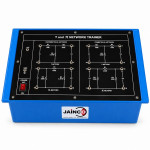
T and P Network Trainer
Product Code : JA-AET-1449
The T and pi network trainer is a panel for verifying the impedance properties of passive T and pi networks in electronics and network theory practicals.
View Details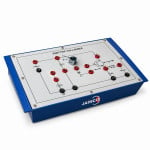
Emitter Follower CC
Product Code : JA-AET-1450
The emitter follower trainer is a common-collector (CC) amplifier board for measuring voltage gain, input impedance and output impedance in electronics practicals.
View Details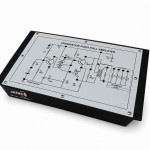
Push Pull Amplifier
Product Code : JA-AET-1451
The push pull amplifier trainer is a class B transistor push-pull amplifier board for audio-frequency practicals.
View Details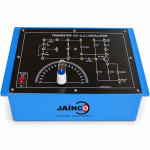
RF Oscillators
Product Code : JA-AET-1452
The RF oscillators board is a panel for radio-frequency oscillator practicals, built around a PNP transistor with a variable gang condenser and an internally connected -9 V DC, 50 mA IC-regulated supply.
View Details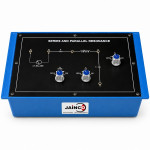
Series and Parallel Resonance
Product Code : JA-AET-1453
The series and parallel resonance trainer lets students plot resonance curves for series and parallel circuits with different values of resistance, capacitance and inductance, and measure Q for both.
View Details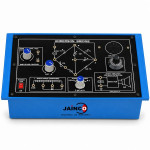
Anderson Bridge
Product Code : JA-AET-1454
The Anderson bridge trainer measures the inductance of a coil by the Anderson bridge method.
View Details
Passive Filters
Product Code : JA-AET-1455
The passive filters trainer is used to study constant-K and m-derived passive filters and to determine their constants and cut-off frequencies.
View Details
Two Stage RC Coupled Transistor Amplifier
Product Code : JA-AET-1456
The two stage RC coupled transistor amplifier trainer is a board with two PNP transistor stages for studying the characteristics of a cascade amplifier.
View Details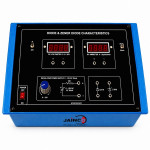
Training Board for Diode and Zener Diode
Product Code : JA-AET-1457
The diode and zener diode training board is used to plot the forward and reverse bias characteristics of a germanium semiconductor diode and the forward and reverse (breakdown) characteristics of a zener diode.
View Details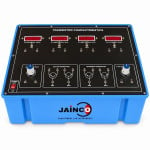
Training Board for Transistor
Product Code : JA-AET-1458
The transistor training board is used to study and plot transistor input and output characteristics in common emitter, common base and common collector modes.
View Details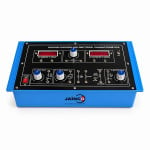
Silicon Controlled Rectifier
Product Code : JA-AET-1459
The SCR characteristics trainer is used to study the DC gate (firing) characteristics and anode current characteristics of a silicon controlled rectifier, measure its holding current and plot its phase firing characteristics.
View Details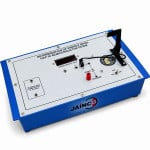
Determination of Energy Band Gap in Semiconductor Diode
Product Code : JA-AET-1460
The energy band gap trainer determines the energy band gap of a P-N junction diode from its reverse saturation current at different temperatures.
View Details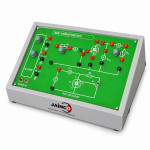
Training Board for Triac
Product Code : JA-AET-1461
The TRIAC training board is used to study the gate characteristics of a TRIAC in modes I+, I-, III+ and III-, its terminal characteristics in modes I+ and III+, and its holding current.
View Details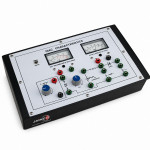
Training Board for DIAC
Product Code : JA-AET-1462
The DIAC training board is used to plot the V-I characteristics of a DIAC and study its break-over voltage, negative resistance region and VBO symmetry.
View Details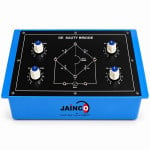
De Sauty Bridge
Product Code : JA-AET-1463
The De Sauty bridge trainer is used to study the working of a De Sauty bridge and to compare the capacitances of two capacitors.
View Details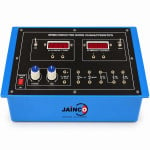
Semiconductor Diode
Product Code : JA-AET-1464
The semiconductor diode trainer is used to plot the forward and reverse bias characteristics of germanium and silicon diodes and to determine the static and dynamic resistance of a forward-biased P-N junction.
View Details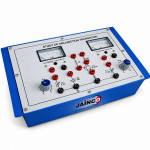
Unijunction Transistor
Product Code : JA-AET-1465
The UJT trainer is used to plot the V-I characteristics of a unijunction transistor and to use it as a relaxation oscillator.
View Details
Active Filters
Product Code : JA-AET-1466
The active filters trainer is used to study the characteristics of op-amp active filters: a 1 kHz low-pass, a 100 Hz high-pass, a 100 Hz to 1 kHz band-pass and a 1 kHz notch filter.
View Details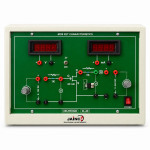
Training Board for MOSFET
Product Code : JA-AET-1467
The MOSFET training board is used to determine the drain characteristics of a MOSFET and to use it as a common-source amplifier, measuring its voltage gain.
View Details
Junction Diode Rectifier and Filter
Product Code : JA-AET-1468
The junction diode rectifier and filter trainer compares half-wave, centre-tap full-wave, bridge full-wave and voltage doubler rectifiers, measuring output and ripple content with different resistive loads.
View Details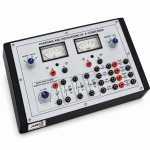
Charging and Discharging of a Condenser
Product Code : JA-AET-1469
The capacitor charging and discharging trainer is used to plot voltage and current against time while a condenser charges and discharges, and to find the time constant from each graph.
View Details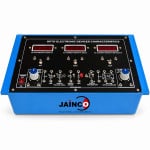
Opto Electronic Devices
Product Code : JA-AET-1470
The opto-electronic devices trainer is used to study the characteristics of six devices: an LED, a photo diode, a photo transistor, an LDR, a photovoltaic cell and an opto-coupler.
View Details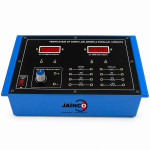
Ohm's Law Series and Parallel Circuits
Product Code : JA-AET-1471
The Ohm's law and series-parallel circuits trainer is used to verify Ohm's law and to study series and parallel resistive circuits.
View Details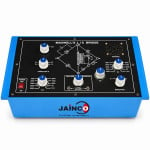
Measurement of Inductance and Capacitance
Product Code : JA-AET-1472
The inductance and capacitance measurement trainer is a bridge panel for measuring unknown capacitances and unknown inductances.
View Details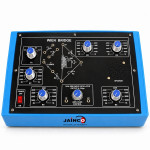
Wien Bridge
Product Code : JA-AET-1473
The Wien bridge trainer is used to study the Wien bridge and to measure capacitance with both the Wien series bridge and the Wien parallel bridge.
View Details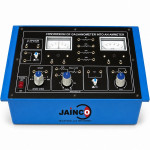
Conversion of Galvanometer into an Ammeter
Product Code : JA-AET-1474
This trainer is used to determine the resistance of a galvanometer by the half-deflection method, find its figure of merit, and convert it into an ammeter of a given range and calibrate it.
View Details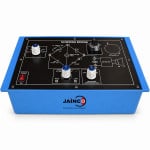
Schering Bridge Trainer
Product Code : JA-AET-1475
The Schering bridge trainer measures unknown capacitance by the Schering bridge method.
View Details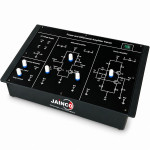
Power and Differential Amplifier Trainer
Product Code : JA-AET-1476
The power and differential amplifier trainer is used to study the working principles of a differential amplifier and a class B push-pull power amplifier.
View Details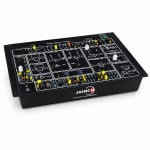
Elementary Fiber Optics Trainer
Product Code : JA-AET-1477
The elementary fiber optics trainer is a simplex analog and digital fiber optic link working at 660 nm, with AM, FM and PWM modulation and demodulation, an on-board function generator and a voice link.
View Details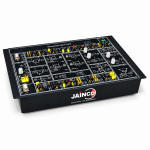
Advanced Fiber Optics Trainer
Product Code : JA-AET-1478
The advanced fiber optics trainer is a full-duplex analog and digital fiber optic link with 660 nm and 950 nm channels, AM, FM and PWM modulation and demodulation, and PC-to-PC communication through RS232 ports with software.
View Details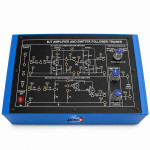
BJT Amplifiers and Emitter Follower Trainer
Product Code : JA-AET-1479
The BJT amplifiers and emitter follower trainer is a board for illustrating a multistage BJT amplifier and an emitter follower.
View Details