Fire Alarm Trainer Manufacturer,Supplier and Exporter in India
Product Code : JA-LABCS-9625
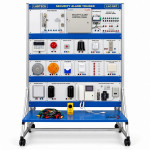
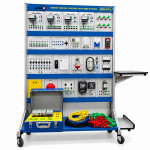
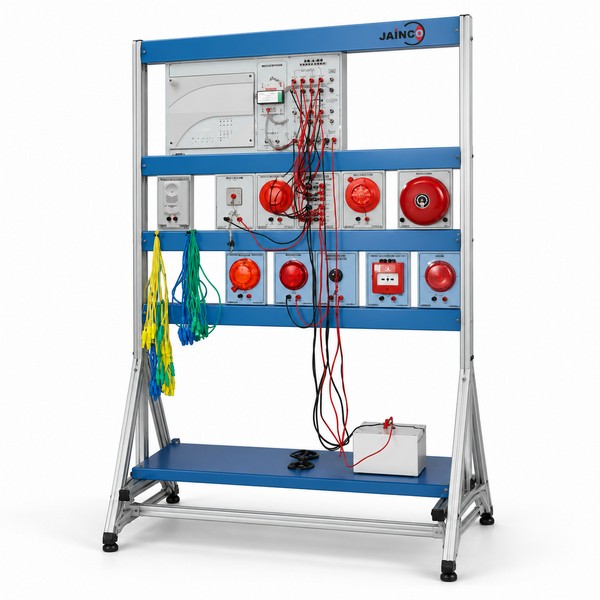
The Fire Alarm Trainer introduces students and technicians to basic fire alarm systems. It lays the groundwork for installing and maintaining fire alarms in buildings. Learners wire detectors, call points and sounders to a zoned control panel, then raise alarms and faults and watch how the panel reports each one.
Specifications of the Fire Alarm Trainer
| Product code | JA-LABCS-9625 |
|---|---|
| Subject and learners | Basic fire alarm systems, for students and technicians |
| Skills | Groundwork for installing and maintaining fire alarm systems in buildings |
| Control panel | Conventional two-zone fire alarm control panel with alarm, fault and power indicators and control switches |
| Detectors | Optical smoke detectors and heat detectors, at least one of each |
| Manual call points | Break-glass manual call points |
| Alarm signalling | Bell or horn sounder and a flashing beacon |
| Power supply | 230 V AC, 50 Hz mains; 12 V DC system supply with a standby battery and charger; mains and battery failure are indicated |
| Construction and wiring | Components on a wall- or bench-mounted training panel, wired through sockets (2 mm or 4 mm) or terminals |
| Documents | Operation manual and experiment manual |
| Supplied by | JaincoLab |
Fire alarm practicals on the trainer
- Zone and sounder circuits. Wire a smoke detector, a heat detector and a call point into one zone, and the sounder and beacon into the sounder circuit. Check each loop with a Digital Multimeter before power-up.
- Alarm and reset. Operate the call point with its test key, silence the sounders and reset the panel. Note which indicators light at each step.
- Fault finding. Open the zone wiring at the last detector, then short it instead. Compare what the panel shows in each case and explain the difference.
- Fire and security side by side. Set the trainer next to the Security Alarm Trainer and compare how each panel treats an open circuit in a zone.
Frequently Asked Questions
Which rooms need a heat detector rather than a smoke detector?
Use heat detectors in kitchens, garages, boiler rooms and dusty or steamy areas, where cooking fumes, exhaust or steam would set off a smoke detector. Elsewhere, smoke detectors are preferred, as they respond much earlier to a smouldering fire. Corridors and escape routes normally get smoke detectors.
How does a rate-of-rise heat detector differ from a fixed-temperature one?
A fixed-temperature detector alarms when the air around it reaches its set temperature. A rate-of-rise detector alarms when the temperature climbs quickly, even well below that point, so it catches a fast fire sooner. Many heat detectors combine both elements.
How does an addressable fire alarm differ from the zoned panel on the trainer?
On a conventional panel, several detectors share one zone circuit, so the panel shows only which zone is in alarm. On an addressable system, each device has its own address on a loop, and the panel names the exact detector. Addressable systems suit large buildings.
How should students test smoke and heat detectors without damaging them?
Use a test aerosol made for smoke detectors, in short bursts from the distance given on the can. Never spray it straight into the detector at close range. Test heat detectors with a proper heat tester, never with a naked flame, and let each detector clear before resetting the panel.
Which tests should be shown on the fire alarm trainer at handover?
Ask to see an alarm from each detector and call point, and a sounder test. Then ask for open and short circuit faults on the zone and sounder wiring, a mains failure and a battery disconnection. JaincoLab service engineers install the trainer and can run these tests with your staff at your site.
Should our tender ask for battery backup and fault indication on the trainer?
Yes. Specify a 12 V standby battery with a charger, and indicators that show mains failure, battery failure and wiring faults. These let students practise the power and fault tests that a real system needs. Send the tender schedule through our tenders page.
Other building control trainers in the range
Companies bidding for Ministry of Education, World Bank or United Nations laboratory tenders can work with JaincoLab as their manufacturing partner: we make and export complete laboratory packages for such projects and have executed them successfully in many countries. Send the tender specification through our tenders page for a quotation.
See the Lighting and Building Control Systems range and more electronics lab equipment from JaincoLab, an electronics lab equipment manufacturer in India.
For a quotation, send the product name and the quantity you need through our contact page. For tender or project supply, see our tenders page.