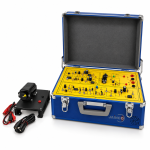
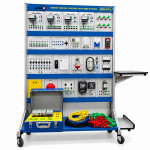
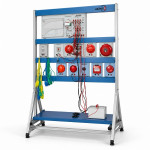
Security Alarm Trainer Manufacturer,Supplier and Exporter in India
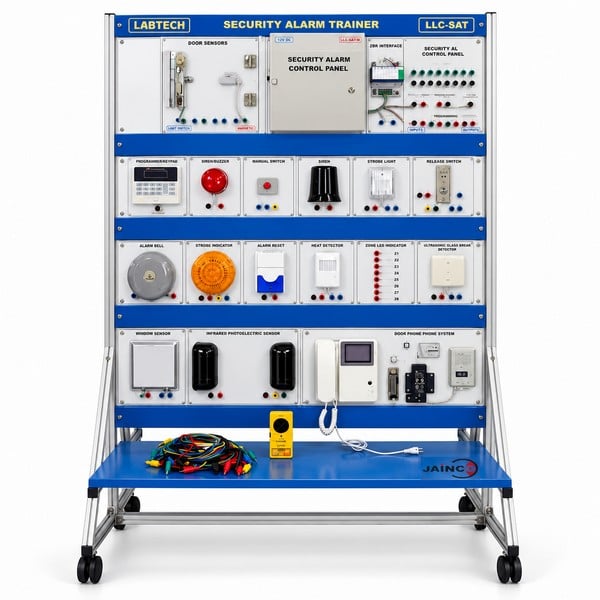
Product Code : JA-LABCS-9618
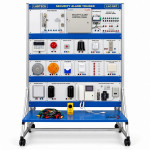
The Security Alarm Trainer introduces students and technicians to basic security alarm systems. It is a first step towards installing and maintaining intruder alarms in homes and other buildings. Learners wire detectors to the control panel, set and unset the system and test how it reacts to an intrusion or a tamper.
Specifications of the Security Alarm Trainer
| Product code | JA-LABCS-9618 |
|---|---|
| Subject and learners | Basic security alarm systems, for students and technicians |
| Skills | First steps in installing and maintaining alarm systems |
| Control panel | Intruder alarm control panel with at least two detection zones |
| Setting and unsetting | Keypad or key switch to set and unset the system |
| Detectors | PIR motion detector, magnetic reed contacts for doors and windows, and a glass-break detector |
| Alarm signalling | Siren with a flashing strobe or beacon |
| Tamper protection | Tamper loops on the detectors and on the control panel |
| Power supply | 230 V AC, 50 Hz mains; 12 V DC system supply with a standby battery |
| Construction and wiring | Components mounted on a training panel and wired through sockets or terminal blocks |
| Supplied by | JaincoLab |
Alarm practicals on the Security Alarm Trainer
- Zone wiring. Wire the door contact and the PIR detector to separate zones. Measure each zone loop with a Digital Multimeter, with the contact closed and open, before connecting it to the panel.
- Setting and unsetting. Set the system from the keypad and open the door contact, first during the exit time and then after it. Note which event raises a full alarm.
- Tamper and power tests. Open a detector cover while the system is unset and watch for a tamper alarm. Then switch off the mains and check that the standby battery keeps the panel running.
- Intruder and fire circuits. Compare the zone circuits with those of the Fire Alarm Trainer, where each zone must report wiring faults as well as alarms.
Frequently Asked Questions
What makes a PIR detector give false alarms, and how do students prevent them?
A PIR detector reacts to moving heat. Sunlight falling on a floor, heaters, air conditioners, curtains moving in a draught and insects on the lens can all trigger it. Mount it at the stated height, aim it away from windows and heat sources, and walk-test the coverage.
Why do some alarm systems use dual-technology detectors instead of a plain PIR?
A dual-technology detector holds a PIR sensor and a microwave sensor. It signals an alarm only when both see movement at the same time. Heat changes or draughts that fool one sensor rarely fool the other, so false alarms fall in difficult rooms.
Why are end-of-line resistors fitted on alarm zone wiring?
The resistor at the far end gives each zone a known resistance, which the panel watches all the time. If an intruder cuts the wires or bridges them to hide a detector, the resistance changes and the panel raises a tamper or alarm. Without the resistor, a bridged zone could go unnoticed.
Which tests should students run when commissioning the alarm on the trainer?
Walk-test every detector and open each door and window contact. Check the entry and exit times, the tamper on each device, the siren and the strobe. Then remove the mains to test the battery. Record every result on a test sheet, as for a real handover.
Can we evaluate one alarm trainer before ordering a full class set?
Yes. A sample unit can be sent with the quotation if required, so your staff can try it first. A JaincoLab team can also demonstrate the trainer to your purchase committee or at your institute. Ask for the sample or the visit through our contact page.
Does the alarm trainer come with a wiring diagram for each detector circuit?
Each JaincoLab instrument can be supplied with its service manual. Ask for the wiring diagram of each zone, detector and sounder circuit by name in your enquiry, so the drawings come with every trainer. Add this to your enquiry on our contact page.
Other building control trainers in the range
Turnkey laboratory projects are a JaincoLab specialism. We manufacture and export equipment for education-ministry programmes, World Bank tenders and United Nations projects, with successful deliveries in many countries. If you are bidding for a similar tender, share the bill of quantities through our tenders page.
See the Lighting and Building Control Systems range and more electronics lab equipment from JaincoLab, an electronics lab equipment manufacturer in India.
For a quotation, send the product name and the quantity you need through our contact page. For tender or project supply, see our tenders page.