Illuminated Process Panel for Crude Palm Oil Production Simulation Manufacturer,Supplier and Exporter in India
Product Code : JA-DAIAPC-9615
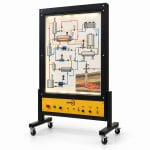
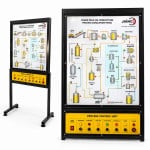
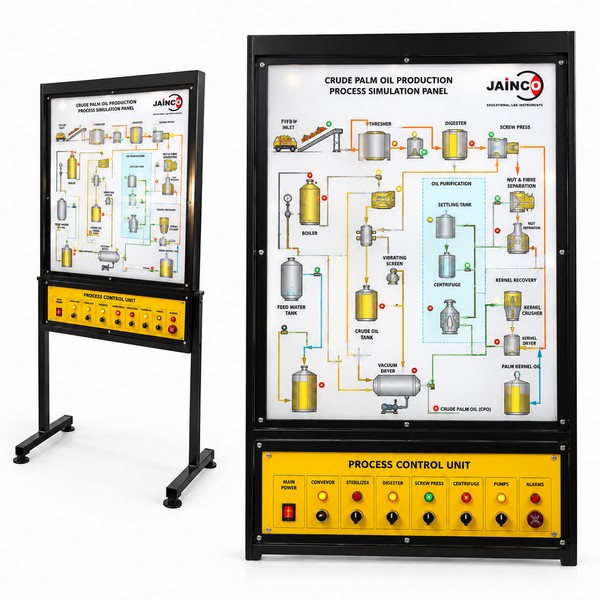
This illuminated panel presents crude palm oil production on an A1-size colour diagram. LEDs under microprocessor control light the process stations in sequence, so students can follow the fruit and the oil through the mill. It makes the operation and layout of a palm oil plant easier to teach in a classroom.
Specifications of the crude palm oil process panel
| Product code | JA-DAIAPC-9615 |
|---|---|
| Process shown | Crude palm oil production, as an illuminated simulation |
| Diagram | A1 size (594 x 841 mm), in colour |
| Animation | LEDs under microprocessor control light the stations one after another to show the material flow |
| Controller | Electronic microcontroller system integrated with the diagram |
| Supplied by | JaincoLab |
Using the palm oil process panel in agro-processing classes
- Station walk-through. Run the LED sequence once without comment. On the second run, follow the fruit and the oil from station to station. At each lit station, ask students what enters it, what leaves it and why the step is needed.
- Free fatty acid test. Dissolve a weighed oil sample in neutralised alcohol and titrate it with dilute alkali from a Burette, using phenolphthalein as the indicator. Relate a high result to fruit handling and the delay before sterilisation.
- Moisture in the oil. Dry a small crude oil sample on the Infra Red Moisture Balance and note the moisture loss. Then find the drying stage on the diagram and explain why wet oil spoils faster.
- Clarification by settling. Leave a warm mixture of oil and water to stand in a Separating Funnel and watch the layers form. Compare this with the clarification station on the panel.
Frequently Asked Questions
How do you read the symbols and lines on a process flow panel?
Each main item of equipment, such as a steriliser, press or tank, is drawn as a symbol. Solid lines carry the main process flow, and arrows show its direction. A process flow diagram shows the main equipment only. A piping and instrumentation diagram adds every valve, instrument and control loop.
Why are fresh fruit bunches sterilised before the oil is pressed out?
Steam sterilisation stops the enzymes that split the oil into free fatty acids. It also loosens the fruit from the bunch for threshing and softens the flesh for digestion and pressing. Proteins coagulate as well, which helps the oil separate cleanly later.
In what order do the stations of a crude palm oil mill work?
Fruit bunches are received and graded, then sterilised with steam. The thresher strips the fruit from the bunches. The fruit is digested and pressed to release crude oil. The oil is then clarified, purified and dried before it goes to storage.
Why does a high free fatty acid level lower the quality of crude palm oil?
Free fatty acids form when the oil is split by water and enzymes, mostly in bruised or old fruit. A high level means more loss during refining and poorer keeping quality. Quick processing, gentle handling and proper sterilisation keep the level low.
Can the panel be supplied for our mains voltage and with our type of plug?
Yes. JaincoLab makes apparatus to a buyer's own specification, so the panel can be built for your mains voltage and fitted with your plug type. State the voltage, frequency and plug type used in your country when you send your enquiry through our contact page.
Can the labels and the manual be printed in our own language?
Ask for this in your enquiry. JaincoLab works to a buyer's own specification and can print a customer's logo on its models. Name the language you need for the station labels and the manual, and send the request through our contact page.
See the Data Acquisition, Instrumentation and Process Control range and more electronics lab equipment from JaincoLab, an electronics lab equipment manufacturer in India.
For a quotation, send the product name and the quantity you need through our contact page. For tender or project supply, see our tenders page.